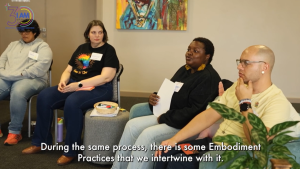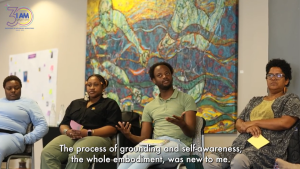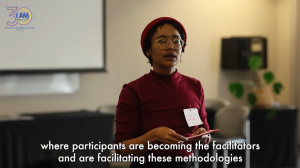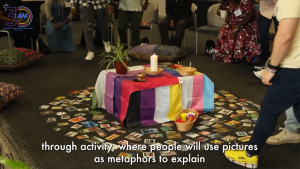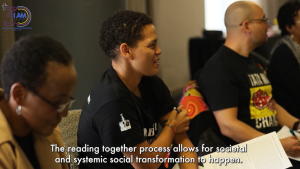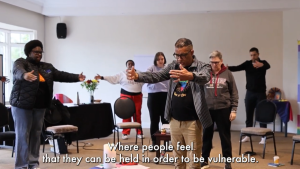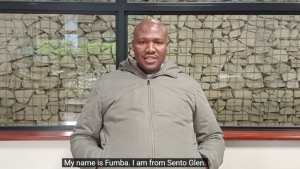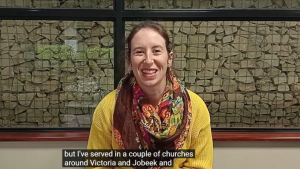

On 11 November, faith leaders, theologians, and advocates gathered for a colloquium to reflect on what it means for churches in Southern Africa to embody inclusion through policy. We partnered with the Beyers Naudé Centre for Public Theology at the Faculty of Theology (Stellenbosch University). The gathering was rooted in IAM’s long-standing conviction that lasting transformation begins when we open hearts, open minds, and open doors, not only in sentiment, but in structure.

We met in a time that feels increasingly complex and polarised. Across denominations, leaders are navigating shifting cultural forces, pastoral challenges, and questions of belonging that cut to the heart of Christian witness. The colloquium created space to pause, to breathe together, and to engage in the slow and courageous work of discerning how churches can respond faithfully in such a moment.
What made the day significant was not only the presentations and discussions, but the spirit in which people came: with honesty, with generosity, and with a shared longing for a church whose welcome is not fragile but embodied. Throughout the day, we returned to a central insight: inclusion becomes sustainable only when it is woven into the very fabric of our institutions. Policies, often seen as administrative, are in fact deeply theological. They tell the truth about who belongs, who leads, and whose humanity is affirmed in the life of the church.

We explored where churches currently find themselves with regards to policy on human sexuality, with representatives from the Dutch Reformed Church, Uniting Reformed Church in Southern Africa, Methodist Church of Southern Africa, Anglican Church of Southern Africa, Uniting Presbyterian Church in Southern Africa, Evangelical Lutheran Church of South Africa, and United Congregational Church of Southern Africa. We looked at the challenges currently facing these denominations, and also started to map potential opportunities for advocacy by identifying key stakeholders.
The colloquium affirmed the importance of collaboration. Lasting transformation does not happen in isolation, but emerges through networks of leaders, scholars, ministers, and communities who accompany one another with courage and conviction.

There was a shared sense of a commitment to not only to talk about inclusion, but to practice it; not only to dream of just churches, but to build them. This gathering was not an ending, but a beginning – a step toward a future where welcome is embodied, justice is practiced, and every person is recognised as bearing the image of God.
For more information or to get involved in this work, contact Louis (louis@iam.org.za)