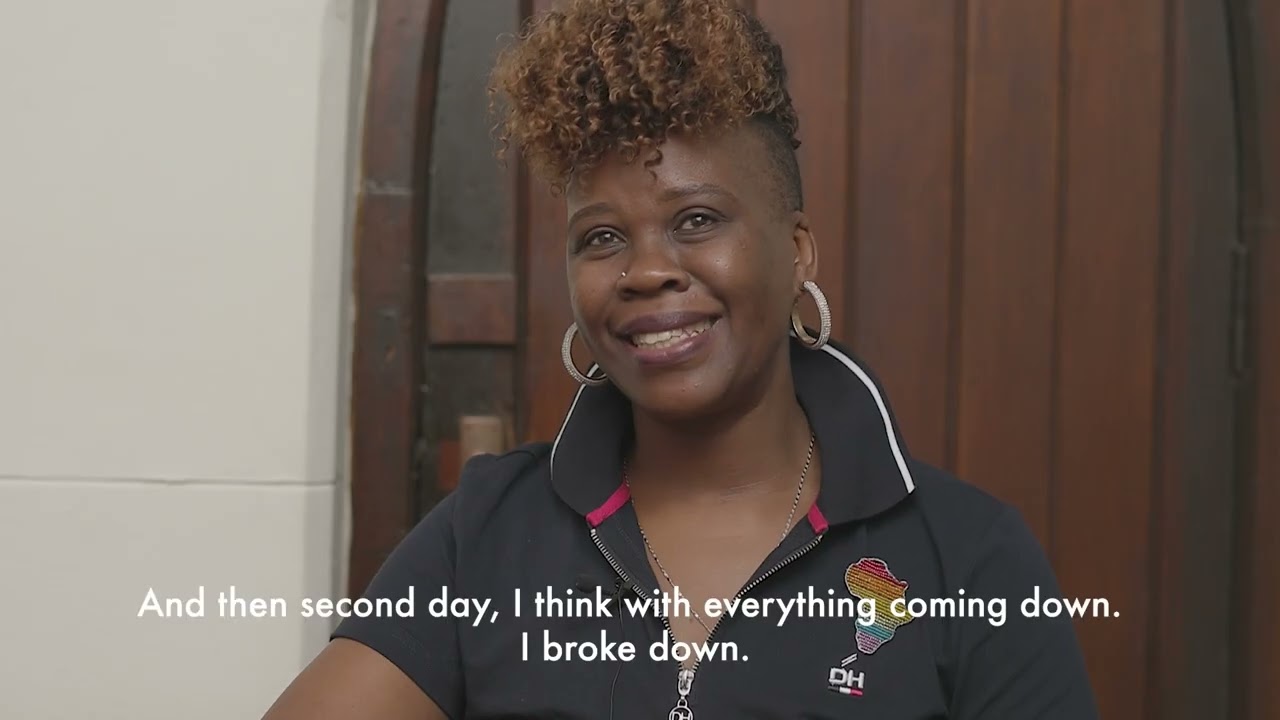

Beyond Protest: The New Playbook for Power from Africa’s LBQ+ Activists
Introduction: More Than Marches
When we imagine activism, the images that often come to mind are of marches, picket signs, and public protest—the visible, frontline battles for social change. While these actions are undeniably vital, they are only one part of a much larger, more intricate story. The most resilient and transformative social movements are often built on sophisticated, unconventional strategies that unfold far from the headlines, in community centers, courtrooms, and quiet back-channel conversations.
A recent learning exchange between Lesbian, Bisexual, and Queer (LBQ+) activists from Kenya and Southern Africa has pulled back the curtain on this deeper work. The insights reveal a powerful playbook for social change that is not just about resisting oppression, but about proactively architecting a more just future. This is not a manual for simple reaction; it’s a masterclass in strategy, collaboration, and long-term vision.
1. They Don’t Just Fight Bad Laws—They Write Good Ones First
For many human rights movements, the default posture is defensive. Activists are often caught in a draining cycle of “reactionary advocacy,” mobilizing to fight discriminatory bills only after they are introduced. This consumes immense energy and keeps movements on their back foot.
In a brilliant strategic pivot, the Kenyan National Gay and Lesbian Human Rights Commission (NGLHRC) decided to go on the offensive. Leveraging Kenya’s “rather liberal” constitution, they didn’t wait for the next hostile proposal to appear. Instead, they proactively drafted their own positive, rights-based framework: the “Equality and Inclusion Bill.” This legislation was designed as a direct counter to the looming anti-homosexuality “Family Protection Bill,” shifting the entire legislative battleground from defense to offense. The true strategic genius, however, lies in its scope. The bill was written to protect not only queer individuals but also other marginalized groups, a deliberate move to build a broader, more powerful coalition for its passage.
2. They Replaced Competition with a Coordinated Ecosystem
In movements where funding is scarce, internal competition can be a corrosive force, leading to duplicated efforts and a fragmented approach. The Kenyan LBQ+ movement, however, operates as a collaborative ecosystem built on a model of informal but widely understood specialization. Instead of competing for the same grants, key organizations have carved out distinct thematic niches, creating a structure where each group plays a clear, complementary role. This allows them to refer cases, share expertise, and strengthen the movement as a whole.
- National Gay and Lesbian Human Rights Commission (NGLHRC): The “legal arm,” focused on strategic litigation and legal reform.
- GALCK+ Plus (Gay and Lesbian Coalition of Kenya): A coordinating body for its 21 member organizations, focusing on security, mental health, and building allyship with key actors like parliamentarians, academics, and theologians.
- Minority Womyn in Action (MWIA): As the oldest queer women’s organization (est. 2006), this membership-based body focuses on political education, narrative change, and documenting queer lives through powerful research projects like “Freedom Dreams” and “Family Reimagined.”
- Cosmopolitan Affirming Church (CAC): The faith-based arm, providing spiritual care and community.
3. They Counter Misinformation with Digital Judo and “Silent Diplomacy”
Activists in the region are up against a “highly organized, well-resourced, and politically connected anti-gender movement” that operates with long-term (10-15 year) strategic plans. There is a clear “mesh between the state and opposition organizers,” making the fight a multi-front war. In response, activists have developed a sophisticated counterstrategy to reclaim the narrative. A national strategic communications working group ensures the movement speaks with a unified voice, allowing for rapid and cohesive responses to media misrepresentation.
On the digital battleground, they deploy a range of tactics, including working with bloggers to shift narratives, sponsoring counter-hashtags, and mobilizing queer and feminist influencers. A powerful example was the “African family” social media campaign, launched to reclaim the narrative from a conference dominated by white evangelicals. The campaign flooded social media with diverse, authentic stories, effectively drowning out the opposition’s narrow definition.
4. They’re Changing Discriminatory Churches from the Inside Out
Rather than treating religious institutions as monolithic opposition, some of the most sophisticated advocacy is happening from within these very structures. Activists are employing a dual approach to transform faith from a tool of oppression into a source of liberation.
- Institutional Change: In South Africa, Inclusive and Affirming Ministries (IAM) works strategically within mainstream churches. IAM works towards addressing exclusionary interpretations of sacred texts, the weaponization of faith, and helping faith leaders create faith spaces that are safe for all, regardless of sexual orientation and gender expression and identity.
- Community Building: The Cosmopolitan Affirming Church (CAC) provides immediate spiritual care for those pushed out by mainstream religion. As the first and only queer-led church of its kind in the country, it has persevered for 12 years, having been forced to move 10 times. It hosts interfaith services that bring together Christian, Muslim, and African Indigenous practitioners, building solidarity and proving that faith and queerness can coexist powerfully.
5. They Show That Trust, Not Funding, Is a Movement’s Most Critical Resource
While funding is a constant challenge, the learning exchange revealed that a movement’s most critical—and most fragile—resource is trust. In Kenya, the “Because Women” initiative, a community-owned space for LBQ and trans-diverse individuals, exemplifies a sustainable, high-trust model.
The initiative operates with a different “resource culture.” This stands in sharp contrast to the South African context, where the privilege of accessing transport reimbursement is often expected. In the Kenyan model, participants often cover their own transport, and partner organizations use their own offices for meetings instead of renting hotel venues. This approach fosters a deep sense of ownership and ensures that these vital community spaces can continue to thrive even without significant external funding. It demonstrates that when a community truly owns an initiative, its resilience is not dependent on the next grant cycle.
Conclusion: A New Playbook for Change
The strategies emerging from these LBQ+ activists in Kenya offer a powerful playbook for social change that goes far beyond simple protest. Their proactive, multi-layered tactics in law, media, faith, and coalition-building demonstrate a sophisticated understanding of how power operates and how systems can be fundamentally transformed.
These are vital lessons for anyone, anywhere, committed to building a more equitable world. Their work reminds us that the most effective change often comes not from shouting the loudest, but from organizing the smartest. As we face our own challenges, their example forces us to ask a critical question:
What hidden levers of power are we overlooking in our own communities?